Google Chrome Task ManagerGoogle Chrome Task Manager

If Google Chrome freezes, hit Shift + Esc. Chrome has an inbuilt Task Manager.

If you’ve supported end users—or used Chrome heavily yourself—you’ve almost certainly heard this sentence:

“Chrome is frozen again.”

The usual response is predictable: Ctrl + Alt + Del → End Task → Chrome.exe.
And just like that, every tab, form, session, and unsaved cloud app is gone.

What many users (and surprisingly, many IT professionals) still don’t realise is that Google Chrome has its own built-in Task Manager, designed specifically to deal with misbehaving tabs, extensions, and plugins without bringing down the entire browser.

As someone who’s spent years on helpdesks, managing service desks, and troubleshooting performance issues across hundreds of endpoints, I can say this with confidence:

👉 Chrome’s built-in Task Manager is one of the most effective first-line troubleshooting tools available—yet it’s massively underused.

Let’s break down how it works, why it exists, and how you can use it properly in real-world IT scenarios.


Why Chrome Has Its Own Task Manager (And Why It Matters)

Chrome’s architecture is fundamentally different from older browsers.

Instead of running as a single monolithic process, Chrome uses a multi-process model, where:

  • Each tab runs in its own process
  • Each extension runs in its own process
  • Each plugin (PDF viewer, codecs, etc.) runs independently
  • The GPU and network service are separate processes

This design offers several advantages:

  • A crashed tab doesn’t crash the entire browser
  • Security is improved through process sandboxing
  • Performance bottlenecks are isolated instead of global

The downside?
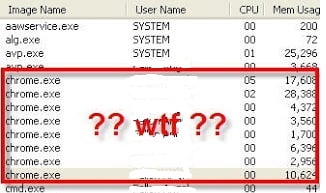
When you open Windows Task Manager, you’re confronted with dozens of identical chrome.exe processes, which tells you nothing about which tab or extension is actually the problem.

This is exactly the gap Chrome’s built-in Task Manager fills.


How to Open Google Chrome’s Built-In Task Manager

There are two reliable ways:

Keyboard Shortcut (Fastest)

Shift + Esc

This works even when Chrome is partially frozen — which is critical in real-world troubleshooting.

Chrome Menu

Chrome Menu (⋮) → More Tools → Task Manager

Once open, you’ll see a Chrome-specific process list that maps directly to what users care about:

  • Tabs
  • Extensions
  • Subframes
  • GPU usage

What You’ll See Inside Chrome Task Manager

Unlike Windows Task Manager, Chrome’s version shows browser-aware metrics, including:

  • Task Name – Actual tab title or extension name
  • Memory Footprint – RAM usage per tab or extension
  • CPU Usage – Helpful for runaway scripts
  • Network Usage – Identify chatty or stuck pages
  • Process ID (PID) – Useful for deeper analysis

This visibility is invaluable when diagnosing:

  • A single tab freezing Chrome
  • One extension consuming excessive RAM
  • High CPU usage on otherwise idle systems
  • Performance complaints on lower-spec devices

Real-World Scenario: Fixing Chrome Without User Rage

Here’s a scenario I’ve personally encountered many times:

A user has:

  • 18 Chrome tabs open
  • A cloud-based ERP system running
  • A half-completed SharePoint form
  • Multiple Microsoft 365 sessions

Chrome becomes unresponsive.

Wrong approach:
End Chrome in Windows Task Manager → user loses everything → escalation → bad day.

Correct approach:

  1. Press Shift + Esc
  2. Identify the tab showing “Not Responding”
  3. Select that process
  4. Click End Process

Result:

  • Only the faulty tab closes
  • Everything else remains intact
  • User thinks you’re a wizard

That’s the kind of win IT professionals should aim for.


Chrome Task Manager vs Windows Task Manager (Why Chrome Wins)

FeatureChrome Task ManagerWindows Task Manager
Identifies specific tabs✅ Yes❌ No
Shows extension impact✅ Yes❌ No
Browser-aware metrics✅ Yes❌ No
Safe tab termination✅ Yes❌ Risky
User-friendly for support✅ Yes❌ No

Windows Task Manager still has its place—especially for system-wide issues—but for Chrome-specific problems, it’s a blunt instrument.

Chrome Task Manager is precise.


Using Chrome Task Manager to Diagnose Extensions

Extensions are one of the biggest causes of Chrome instability.

Common offenders include:

  • Ad blockers with aggressive filtering
  • Poorly written PDF or screenshot tools
  • Legacy extensions that haven’t been updated

Inside Chrome Task Manager, extensions appear clearly by name.

If you notice:

  • High memory usage
  • Persistent CPU activity
  • Network usage when idle

That extension is a prime suspect.

Pro tip:
Terminate the extension process, then disable it permanently via:

chrome://extensions

This is often faster and safer than uninstalling blindly.


Advanced Insight: Memory Footprint vs “Chrome Is a Memory Hog”

Chrome gets a bad reputation for RAM usage, but in enterprise environments, this criticism is often misunderstood.

Chrome:

  • Allocates memory aggressively
  • Releases memory reluctantly
  • Prioritises responsiveness over low RAM usage

The built-in Task Manager lets you prove this empirically by showing which tabs or extensions are actually consuming memory.

In my experience, it’s rarely “Chrome” — it’s:

  • One poorly optimised SaaS web app
  • One tab left running for weeks
  • One extension doing too much

This distinction matters when defending Chrome in IT decision-making conversations.


When Chrome Task Manager Won’t Help

Be realistic — it’s not a silver bullet.

Chrome Task Manager won’t fix:

  • GPU driver crashes
  • Corrupt user profiles
  • OS-level memory exhaustion
  • Disk I/O bottlenecks

But it should always be your first stop before:

  • Killing the browser
  • Rebooting the machine
  • Rebuilding the profile

Best Practices for IT Teams

From a support and operations perspective, I recommend:

  • Teaching users Shift + Esc during onboarding
  • Documenting Chrome Task Manager in SOPs
  • Using it during remote support sessions
  • Capturing screenshots before terminating processes
  • Pairing it with chrome://memory-internals and chrome://performance for deeper analysis

Small knowledge wins like this reduce tickets, downtime, and frustration.


Conclusion: Small Shortcut, Big Impact

Google Chrome’s built-in Task Manager isn’t flashy, and it doesn’t get much attention — but for IT professionals, it’s one of the most practical troubleshooting tools available.

Knowing how and when to use it allows you to:

  • Resolve issues faster
  • Preserve user sessions
  • Avoid unnecessary browser restarts
  • Look far more competent than reboot-first troubleshooting

If you take nothing else away, remember this:

Before killing Chrome, press Shift + Esc.

It’s a tiny shortcut that delivers outsized value — exactly the kind of efficiency IT professionals should be aiming for.

Leave a Reply

Your email address will not be published. Required fields are marked *