
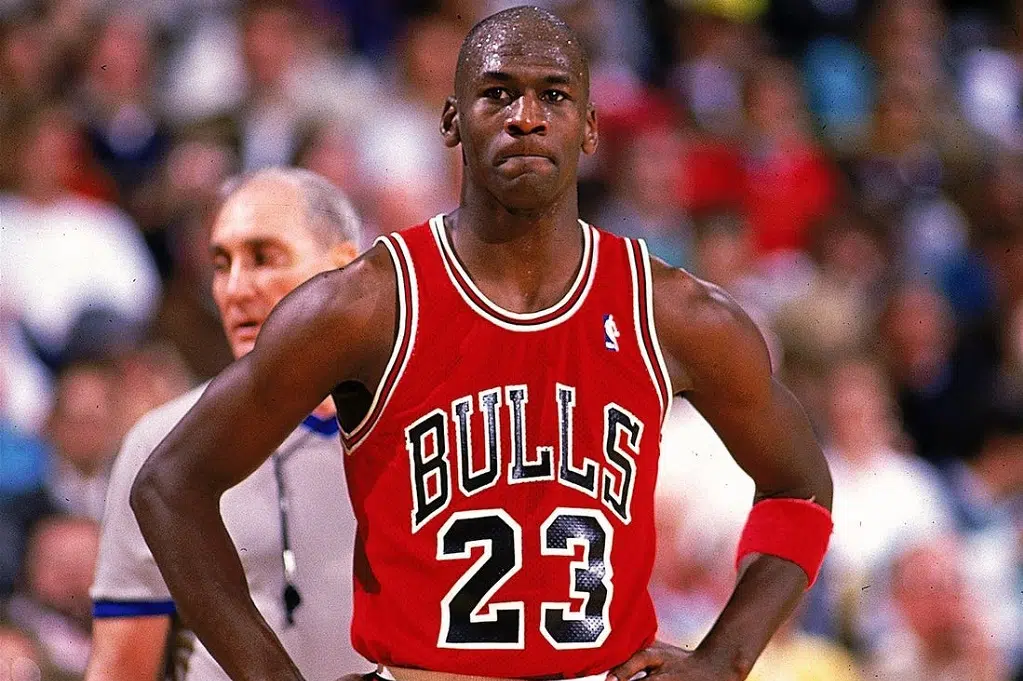
I have been watching a documentary on Netflix called “The last dance” which is based around Michael Jordan’s story and his time at the Chicago Bulls where they won an astonishing 6 championships. Upon finishing the series I couldn’t help but wonder, how did someone like Michael Jordan, who had complete control over the documentary be portrayed so poorly. By his own admission, he admits that he was, for lack a better word, an arsehole. He was controlling, sometimes mean, petty, capricious, he held grudges and was at times violent. He pushed himself and pushed and pulled his teammates, and it didn’t matter who or what was in his way, he was going to find a way over or around every obstacle. He wasn’t all that bad and did a lot of great in his time at the Bulls and he was well respected by all in the league and franchise and fans.
There are basically three facts that came out of the documentary “The Last Dance”. The first was that Michael Jordan was clearly an arsehole. Secondly, the fact that the Bulls won an unprecedented of 6 championships and will be remembered as one of the most successful sporting clubs in history. The third fact that people reason with, is that the Bulls won those 6 championships because Michael Jordan was an arsehole. There is no evidence of this third fact as nobody can ever know that the Bulls could not have won these championships because of this behaviour. But most that have watched the documentary, clearly believe that it was because of this behaviour he could lead and drive such a successful team.

If you ask Jordan’s teammates if he was hard on them and did you step over the line? they would say yes. If you also ask them, would they do it again in a second? the answer would also be yes.
Here’s the difference between Jordan and a lot of people that try to be that hard on others:
Jordan EARNED that right. He didn’t ask his teammates to do anything that he wasn’t willing to do himself. He had a standard that he held himself to…and he became smart enough to recognize that he couldn’t do it all on his own. So he held his teammates to that standard because he saw where it got himself to.
If you manage a team, whether it is an I.T team, a sales team or you manage one of your companies branch offices, you can learn some wrong lessons from watching “The Last Dance”. Such lessons include – you can lead a successful team by being a hard and tough leader, making sacrifices is a key to success and you can drive employees to perform at a high level out of fear.
These lessons should not be the main takeaway from this documentary. The picture that is painted of Michael Jordan’s behaviour in documentary at times outshines the fact that he was actually by a long way the greatest player to have ever played the game and his greatness as an athlete. It was when he left the Bulls for a couple of years to play Baseball where the world saw his true value to the team. This is the one thing I admire about MJ the most. He had the courage to leave the sport, which he loved and he was clearly the best in the world at, to venture outside of his comfort zone into another sport. In the years that Jordan spent away from the Bulls, the team had very little success. Upon his return, they started winning again which is truly a mark of his greatness in the sport. His behaviour actually had nothing to do with the success of the Bulls, It is clear that the success came from his talent and impact as a player.
There are actually a lot of people in the world who do actually believe that the only way we can achieve success is through suffering and by being hard and tough and through making sacrifices. “The Last Dance” saw how Michael Jordan lead a team to a high level of success because of this same behaviour. I think this view is false and should never be an approach by any leaders that are seeking success for their own team. I think there is much more success to be found (in business, in art, and in life) in fun, happiness, camaraderie, and in simply enjoying what you do on the whole. In real life, there are many examples. Richard Branson clearly attributes much of his success to the fact that he’s enjoyed himself along the way. Ben and Jerry, the ice cream makers, say the same thing and so does Yvon Chouinard of Patagonia, Herb Kelleher of Southwest Airlines, Tony Hsieh of Zappos and many others.
