Error code 0xC004F074 is one of the most common Windows activation errors encountered in enterprise and managed environments, particularly those using Key Management Service (KMS) for volume licensing.
The error typically appears as:
“The Software Licensing Service reported that the computer could not be activated. No Key Management Service (KMS) could be contacted.”
While this error can occur after upgrading to Windows 10 or Windows 11, in practice I’ve most often seen it appear after:
- In-place OS upgrades
- Imaging or reimaging systems
- Network changes (DNS, VLANs, firewalls)
- Domain migrations
- Time sync or NTP issues
- Decommissioning or rebuilding a KMS host
At its core, 0xC004F074 means the client cannot successfully communicate with a valid KMS host.

Why This Error Happens (The Real Causes)
From real-world experience, this error almost never has a single cause. Instead, it’s usually a chain of small misconfigurations.
Common Root Causes
- KMS host is unreachable or offline
- DNS SRV records for KMS are missing or stale
- System time differs too much between client and KMS host
- Incorrect KMS client key installed
- Firewall blocking TCP port 1688
- Corrupted licensing store
- Reused or blocked product keys
- Client is outside the corporate network
It’s also worth stating clearly: pirated or non-genuine Windows builds will frequently trigger this error. No amount of troubleshooting will fix activation on an illegal OS image.
Step 1: Identify the Current Activation State (Always Do This First)
Before making changes, you need visibility.
Open Command Prompt as Administrator and run:
slmgr.vbs /dlv


This provides critical information, including:
- License type (KMS, MAK, Retail)
- KMS server name (if configured)
- Activation status
- Grace period remaining
👉 Pro tip: I always capture this output before and after changes. It makes rollback and documentation far easier.
Step 2: Remove the Existing KMS Key and Reinstall It
This is one of the most effective fixes when activation data becomes corrupted—especially after upgrades or imaging.
Remove the Existing Product Key
slmgr.vbs /upk
This uninstalls the current key from the system.
(Optional but recommended)
slmgr.vbs /cpky
This removes the key from the registry to prevent reuse.
Install the Correct KMS Client Key
slmgr.vbs /ipk <Your-KMS-Client-Key>
Make sure you are using the correct key for the Windows edition (e.g., Pro, Enterprise, Education). This is a very common oversight.
Activate Windows
slmgr.vbs /ato
If activation still fails, don’t assume the key is bad—network and DNS issues are more common.
Step 3: Verify Time and Date Synchronisation (Critical for KMS)
KMS is extremely sensitive to time drift.
If the client and KMS host differ by more than a few minutes, activation will fail silently.
What to Check
- Correct time zone
- Correct system time
- Domain time sync (w32time)
Run:
w32tm /query /status
In corporate environments, I’ve seen entire activation failures caused by:
- Broken domain time hierarchy
- Incorrect NTP sources
- VMs resuming from snapshots
Fixing time sync alone has resolved 0xC004F074 more times than I can count.
Step 4: Check DNS and KMS Publishing
KMS relies on DNS SRV records to locate the activation server automatically.
Common DNS Issues
- _vlmcs._tcp record missing
- DNS replication delays
- Old KMS host records lingering
- Split-DNS misconfigurations
Disable and Re-Enable DNS Publishing (Advanced Fix)
This can help refresh broken KMS registration.
- Open Registry Editor as Administrator
- Navigate to:
HKEY_LOCAL_MACHINE\SOFTWARE\Microsoft\Windows NT\CurrentVersion\SoftwareProtectionPlatform
- Create a new DWORD (32-bit) value:
DisableDnsPublishing
- Set value to:
1= Disable DNS publishing0= Enable DNS publishing
Restart the Software Protection service after changes.
⚠️ Only do this if you understand your KMS topology.
Step 5: Test KMS Connectivity Manually
You can explicitly point the client to a KMS host to rule out DNS issues.
slmgr.vbs /skms kmsserver.yourdomain.local:1688
slmgr.vbs /ato
If this works, your problem is DNS, not licensing.
Also verify that TCP port 1688 is open between the client and KMS host—especially across VLANs or firewalls.
Step 6: Run System File Checker and DISM
Corrupt system files can break the licensing stack.
Run these commands in order:
sfc /scannow
Then:
DISM /Online /Cleanup-Image /RestoreHealth
In my experience, this is particularly effective on systems that were upgraded rather than clean-installed.
Step 7: Use the Windows Activation Troubleshooter
While basic, it can still resolve edge cases.
Navigate to:
Settings → Update & Security → Activation → Troubleshoot
It won’t fix broken KMS infrastructure, but it can reset local activation components.
Step 8: Activate Windows by Phone (Last-Resort Option)
This is useful when:
- Internet access is restricted
- Keys have hit activation limits
- Automatic activation fails repeatedly
Follow:
Settings → Update & Security → Activation → Activate by phone
You’ll be guided through the Product Activation Wizard.
When to Contact Microsoft Support
If you’ve confirmed:
- The OS is genuine
- The correct key is installed
- KMS is reachable
- DNS and time sync are correct
…and activation still fails, the key may be blocked or exhausted.
Microsoft Support can:
- Reset activation counters
- Replace blocked keys
- Validate licensing compliance
In enterprise environments, this is sometimes unavoidable.
Check Time And Date Settings
Wrong date and time of your system may reflect the KMS host and client, hence it might trigger error code 0Xc004F074. This solution is very simple, go to the time and date settings to verify that the time and date is updated.
To check these, go to Windows Settings and click on “Time & Language”. Ensure your settings reflect the current Time Zone settings
Disable and Re-enable DNS host
DNS could sometime be the cause of this error due to DNS not updating and disabling and enabling DNS publishing may help. In order to disable DNS publishing Slmgr.vbs script can be used, however, you can do this manually by following below steps.
Open command prompt as administrator and type Regedit
Go to HKEY_LOCAL_MACHINE\SOFTWARE\Microsoft\Windows NT\CurrentVersion\SoftwareProtectionPlatform in the registry
Create a New DWORD Value called “DisableDnsPublishing” and set its value to 1.
This will disable DNS publishing
To re-enable DNS publishing set the value of this Key to 0.
Run DISM and System File Checker
Open Command Prompt as an administrator and execute the following command:
Run command : sfc /scannow
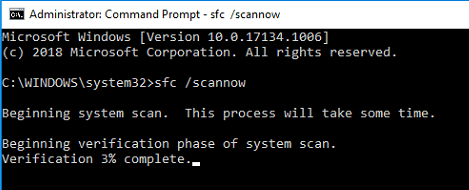
It will run the System File Checker.
Run Command DISM /Online /Cleanup-Image /RestoreHealth

Run the Update and Activation Troubleshooter
The Update and ActivationTroubleshooter tries to resolve all issues automatically. In order to do so, you need to go to Settings > Update & Security > Troubleshooter > select Windows Update and run the troubleshooter.
This is the best way which you can follow in order to fix the activation error code.
Final Thoughts from the Field
Windows activation error 0xC004F074 is rarely “just an activation issue.”
It’s usually a symptom of DNS, time, network, or infrastructure drift.
In real IT environments, the fastest resolution comes from:
- Understanding how KMS actually works
- Verifying fundamentals before reinstalling keys
- Treating activation as an infrastructure dependency—not a standalone feature
If you’re seeing this error frequently, it’s often a sign that your KMS or DNS design needs attention, not that Windows itself is broken.

From my early days on the helpdesk through roles as a service desk manager, systems administrator, and network engineer, I’ve spent more than 25 years in the IT world. As I transition into cyber security, my goal is to make tech a little less confusing by sharing what I’ve learned and helping others wherever I can.
