Tabbed browsing has revolutionized how we interact with the web. As IT professionals, we often juggle multiple research tabs, cloud dashboards, documentation, and monitoring consoles simultaneously. Losing a tab—or worse, an entire browser window—can disrupt workflows, delay troubleshooting, or even cause lost work. Fortunately, Google Chrome provides several ways to reopen closed tabs, whether by using shortcuts, menus, or session management tools.
This guide goes beyond basic instructions. It provides real-world solutions, tips for preventing tab loss, and strategies for enterprise and multi-device users.
Understanding Tab Loss in Chrome
Tabs in Chrome are temporary browsing sessions. When you close a tab, Chrome removes it from memory. However, Chrome keeps a short history in its session storage, allowing you to recover the tab if the browser hasn’t been restarted excessively or if session history hasn’t been cleared.
Common scenarios that lead to lost tabs:
- Accidentally clicking the “X” on a tab
- Closing the entire Chrome window
- Browser or system crashes
- Updates or forced restarts on managed devices
- Clearing browsing history or session cookies
For IT professionals, understanding these scenarios is crucial, especially when users report lost work, forgotten tabs, or open cloud dashboards that must be recovered quickly.
Method 1: Keyboard Shortcuts – The Fastest Way
The quickest and most reliable method for reopening closed tabs in Chrome is using keyboard shortcuts.
Windows / Linux:
- Ctrl + Shift + T: Reopens the most recently closed tab.
- Repeat this shortcut to restore previously closed tabs in the order they were closed.
macOS:
- Command + Shift + T: Reopens the most recently closed tab.
- Repeat to restore multiple tabs sequentially.
Pro Tip: If you accidentally closed an entire Chrome window, pressing the shortcut will restore the last closed window with all its tabs, saving hours of lost browsing time.
Real-world usage: In enterprise environments, multiple tabs may contain active cloud console sessions. Using this shortcut often prevents the need to log back into multiple services, which is particularly useful when MFA (Multi-Factor Authentication) is enabled.
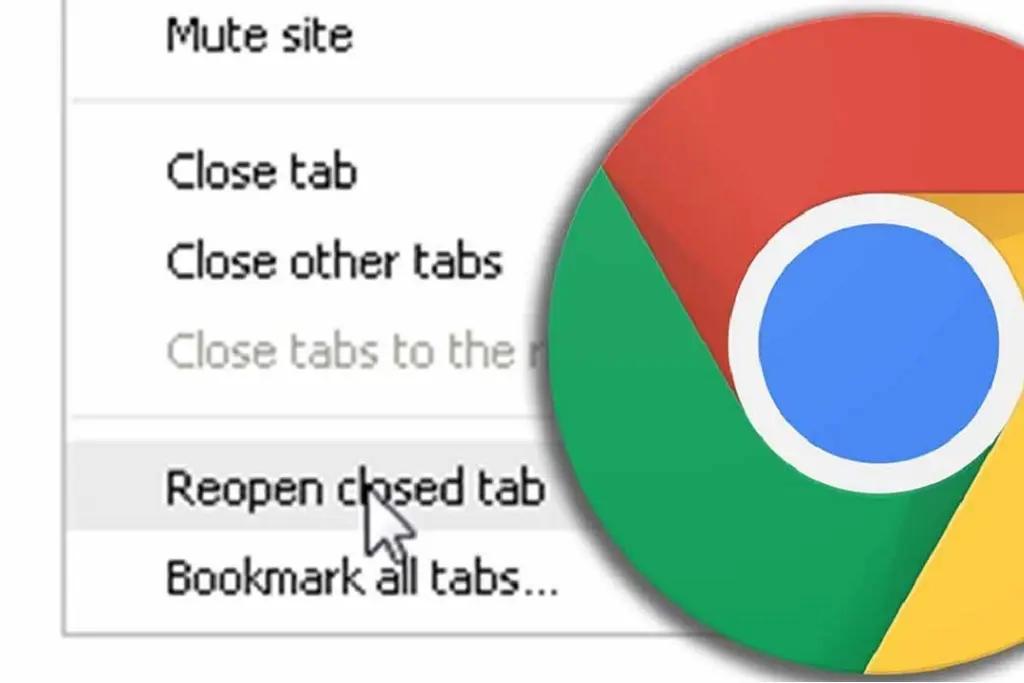
Method 2: Reopen Closed Tab from the Context Menu
For those who prefer mouse-based interactions:
- Right-click on the tab bar (not the tab itself).
- Select “Reopen closed tab” from the popup menu.
This menu action works the same as the keyboard shortcut and is ideal for touchscreen devices or Chromebook users who may not rely on keyboard shortcuts.

Tip for IT admins: On enterprise-managed Chromebooks, some policies may restrict session restoration. In such cases, keyboard shortcuts may be blocked, and right-click recovery is your alternative.
Method 3: Use Chrome History
Chrome maintains a complete browsing history that can help you recover tabs that were closed days ago.
Steps:
- Open Chrome and press Ctrl + H (Windows/Linux) or Command + Y (Mac) to open the History page.
- Browse through Recently Closed Tabs or use the search box for the website or page you lost.
- Click the entry to reopen it.
Advanced Tip: For IT professionals handling user support, the History page can be a lifesaver in enterprise environments where tabs are lost due to forced system restarts or crashes.
Method 4: Restore Entire Chrome Windows
Sometimes you close an entire Chrome window by accident. To restore it:
- On Windows or Mac, right-click the Chrome icon in the taskbar or dock and select “Reopen Closed Window” if the option is available.
- Alternatively, use Ctrl/Command + Shift + T repeatedly until the entire window is restored.
Enterprise insight: If multiple users are logged into Chrome profiles on a shared workstation, be aware that restoring windows may reopen other users’ tabs if profiles were mixed.
Method 5: Use Chrome Session Management Extensions
For IT professionals who often manage dozens of critical tabs, Chrome’s built-in recovery may not be enough. Session management extensions provide persistent tab storage and recovery features. Some popular options include:
- Session Buddy: Saves tab sessions and allows recovery after crashes.
- Toby for Chrome: Organizes tabs into workspaces for research and projects.
- OneTab: Reduces memory load while allowing tab restoration.
Pro Tip: Deploying session management extensions in enterprise environments can improve productivity and reduce helpdesk requests for “lost tabs.”
Mobile Devices: iOS and Android
Screen mirroring or touch devices also support tab recovery:
Android:
- Tap the three-dot menu in Chrome.
- Tap Recent Tabs to see closed tabs.
- Tap the desired tab to reopen.
iOS:
- Tap the tab switcher icon.
- Long-press the “+” button.
- Select Recently Closed Tabs.
Real-world note: Mobile recovery is less intuitive, but IT support teams can guide users to recover critical tabs remotely, especially during training sessions or remote troubleshooting.
Troubleshooting Tab Recovery
Even with shortcuts and menus, tab recovery may fail due to:
- Corrupted user profile: Create a new Chrome profile to restore basic functionality.
- Cleared cache/history: Closed tabs can’t be restored if history is deleted.
- Managed policies: Enterprise policies can prevent tab restoration for security reasons.
IT Pro Tip: For enterprise users, backing up Chrome profile directories can help restore sessions in case of profile corruption or system migration.
Best Practices for IT Professionals
- Educate users: Train teams on keyboard shortcuts and right-click recovery.
- Use session managers: For research-heavy roles or cloud admin dashboards, session management extensions are essential.
- Enable Chrome sync: Sync allows tabs to be restored across devices, critical for multi-device users.
- Back up profiles regularly: IT admins can script backups of
User Datadirectories to prevent loss during migrations. - Leverage Enterprise Policies: Configure group policies for session retention in corporate environments.
Conclusion
Losing a tab in Chrome may seem trivial, but for IT professionals managing research, cloud dashboards, or mission-critical web tools, restoring a closed tab quickly can save hours of work.
By combining keyboard shortcuts, context menus, history recovery, session management extensions, and mobile techniques, you can ensure minimal disruption to workflow.
Remember, the best strategy is prevention: train users, enable sync, and implement enterprise-grade session management. Chrome is powerful, but only when you know how to control it — not the other way around.

From my early days on the helpdesk through roles as a service desk manager, systems administrator, and network engineer, I’ve spent more than 25 years in the IT world. As I transition into cyber security, my goal is to make tech a little less confusing by sharing what I’ve learned and helping others wherever I can.
