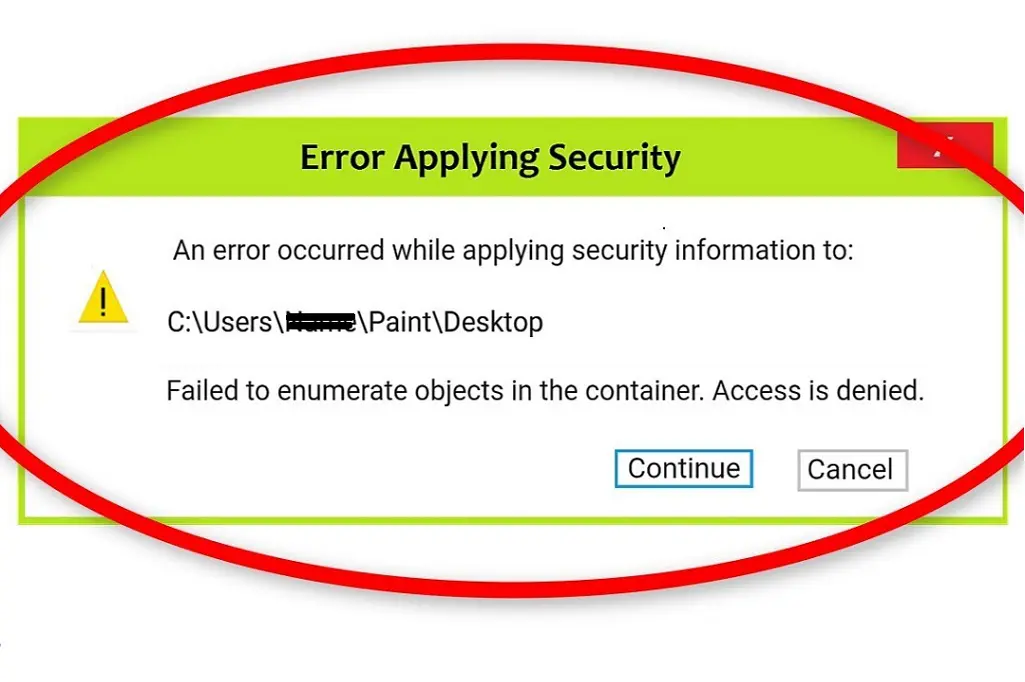
failed to enumerate objects in the container access is denied

If you’ve spent enough time administering Windows systems, you’ve almost certainly run into this classic — and frustrating — error:

“Failed to enumerate objects in the container. Access is denied.”

It usually appears when you’re:

  • Modifying NTFS permissions
  • Cleaning up inherited ACLs
  • Migrating data between systems
  • Accessing folders copied from another machine
  • Fixing permissions after a restore, migration, or failed uninstall

What makes this error particularly annoying is that it often occurs even when you’re logged in as a local administrator.

This article explains:

  • What the error actually means at the NTFS level
  • Why “Administrator” isn’t always enough
  • How ownership differs from permissions
  • Multiple ways to fix it (GUI, CLI, Safe Mode)
  • Real-world scenarios where this commonly occurs

What “Failed to Enumerate Objects in the Container” Actually Means

At a technical level, Windows is telling you this:

You do not have sufficient permissions to read or modify the Access Control Entries (ACEs) on one or more child objects inside this folder.

Key points:

  • Enumeration = reading all files/subfolders and their permissions
  • Container = the parent folder
  • Access denied = Windows blocked the ACL modification

This usually happens when:

  • You are not the owner of one or more child objects
  • Permissions are explicitly denied on subfolders
  • Inheritance is broken or corrupted
  • Files were created under a different SID (security identifier)

Ownership vs Permissions (A Critical Distinction)

One of the most misunderstood aspects of Windows security is the difference between ownership and permissions.

Ownership

  • The owner controls who can change permissions
  • Ownership overrides permission restrictions
  • Even administrators cannot modify ACLs without ownership

Permissions

  • Define who can read, write, modify, or delete files
  • Can be inherited or explicitly set
  • Can include deny entries, which override allow entries

👉 Key takeaway:
If you are not the owner, Windows may block permission changes — even if you’re an admin.


Common Real-World Scenarios Where This Error Appears

From hands-on experience, this error most commonly shows up in these situations:

  • Files copied from another PC or domain
  • Data restored from backup software
  • User profile folders after account deletion
  • External drives formatted on another system
  • ProgramData or Windows folders modified manually
  • Malware cleanup aftermath
  • Failed application uninstalls

In enterprise environments, it’s especially common after:

  • File server migrations
  • Domain disjoins/rejoins
  • SID history issues

The Correct Fix: Take Ownership First (Then Fix Permissions)

Before you touch permissions, you must take ownership of the folder and all child objects.

Step-by-Step: Taking Ownership via GUI

Right-click the root folder
Select Properties → Security tab

Failed to enumerate objects in the container access is denied

Click Advanced

At the top, locate Owner
Click Change

In the Select User or Group window:

  • Enter your username or Administrators
  • Click Check Names
  • Click OK

Back in Advanced Security Settings:

  • Tick Replace owner on subcontainers and objects

Tick:

  • Replace all child object permission entries with inheritable permission entries from this object

Click Apply
Expect warnings — this is normal

Once ownership is set, confirm permissions:


Ensuring Permissions Are Correct After Ownership Change

  1. In Permission entries, ensure:
    • Administrators → Full Control
    • SYSTEM → Full Control
    • Required users/groups → Appropriate access
  2. If needed, click Add
    • Add Everyone or specific security groups
    • Assign least-privilege access where possible
  3. Apply changes and close all dialogs

At this point, the error is resolved in most cases.


When the GUI Fails: Command-Line Fix (Faster & More Reliable)

For stubborn cases or large directory trees, the command line is often superior.

Take Ownership Recursively

Open Command Prompt as Administrator:

takeown /f "C:\ProblemFolder" /r /d y

Reset Permissions

icacls "C:\ProblemFolder" /grant administrators:F /t

Why this works better:

  • Bypasses GUI limitations
  • Faster on large file structures
  • Handles deeply nested ACLs

💡 Pro tip:
This is my go-to method on file servers and migrated data.


Fixing the Issue in Safe Mode (When Files Are Locked)

Sometimes Windows services or applications lock files and prevent ACL changes.

Recommended escalation path:

  1. Boot into Safe Mode
  2. Retry ownership and permission changes
  3. If still failing, boot into Safe Mode with Networking

Safe Mode:

  • Loads minimal drivers
  • Prevents services from holding file handles
  • Bypasses third-party security software interference

Advanced Causes IT Pros Should Be Aware Of

Explicit Deny Permissions

A single Deny ACE on a child object can break inheritance.

Check for:

  • “Deny” entries on SYSTEM or Administrators
  • Orphaned SIDs from deleted accounts

Corrupted ACLs

Occasionally ACLs become corrupted (seen after power loss or disk issues).

Fix with:

icacls "C:\ProblemFolder" /reset /t

EFS or BitLocker Encryption

Encrypted files may appear accessible but block permission changes.

Verify:

  • EFS encryption status
  • BitLocker ownership context

Preventing This Error in the Future

From real-world operations, here’s what actually helps:

  • Avoid copying data via FAT/exFAT when NTFS is required
  • Preserve ACLs during migrations (robocopy /copyall)
  • Don’t manually edit permissions on system folders
  • Standardize ownership on shared storage
  • Document permission baselines for servers

Final Thoughts: Why This Error Is a Symptom, Not the Problem

“Failed to enumerate objects in the container” isn’t really the issue — it’s a symptom of broken ownership or permission inheritance.

Once you understand:

  • NTFS ownership hierarchy
  • How Windows enforces ACL changes
  • Why admin ≠ owner

The fix becomes predictable and repeatable.

For IT professionals, mastering this process saves:

  • Hours of troubleshooting
  • Risky registry hacks
  • Unnecessary OS rebuilds

If you manage Windows systems long enough, this error will find you again — now you know exactly how to shut it down.. If this still doesn’t work, try booting into safe mode with networking.

One thought on “Windows – Failed to enumerate objects in the container access is denied”
  1. Great post! I encountered the “Failed to enumerate objects in the container: access is denied” error last week while trying to manage user permissions. Your troubleshooting steps were really helpful. I was able to resolve it by resetting the permissions. Thank you for the clear explanations!

Leave a Reply

Your email address will not be published. Required fields are marked *